 Infant Dental Health
The First Dental Visit
A getting-to-know-you appointment within six months of the first tooth, with no procedure of any kind.
25 minutesDetails

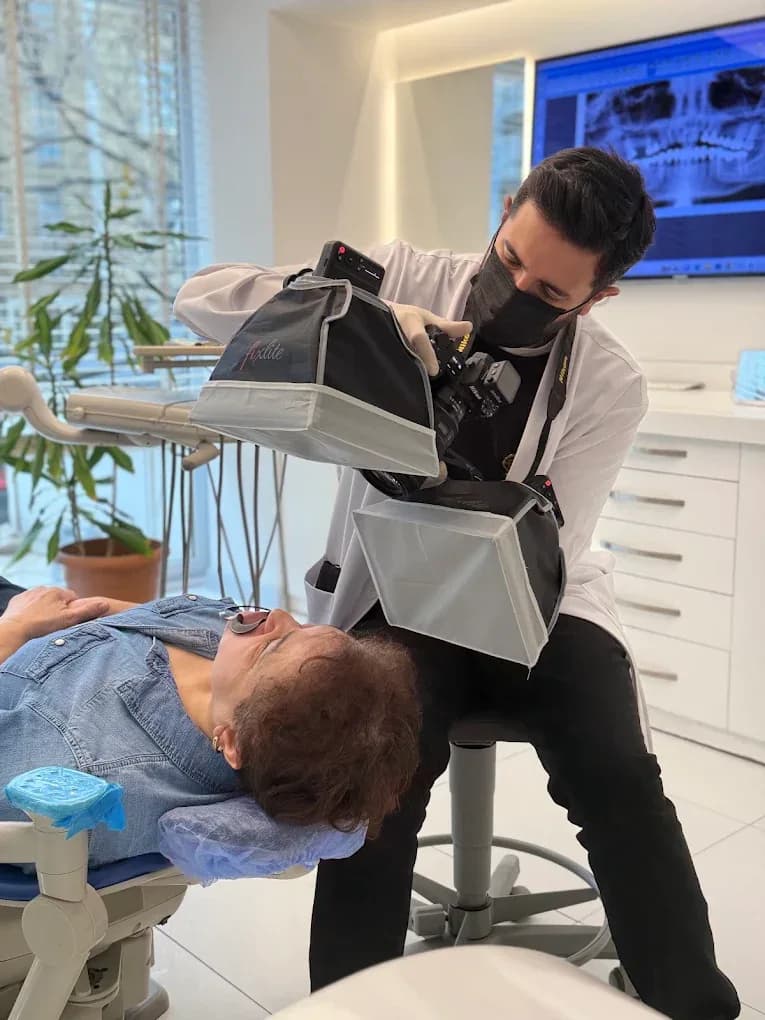 Dt. Şahabettin TunaDentist — Founder
At our children's dental clinic in Caddebostan, nothing is done at the first appointment: the child gets to know the room, the instruments and us. If treatment is needed, we explain it to them first and to you second — and when a hand goes up, we stop.
You don't need to know which treatment is needed. Pick the sentence closest to your situation and we'll explain what we do for it.
Tap an area on the chart to see what comes up most often on those teeth and which treatments we look at.
The first teeth in and the first out. They take most of the impact in a fall, so discolouration and chips come up here most often.
See treatments for this areaThis chart is not an assessment tool; only an examination — and imaging where needed — can say what is happening on a given tooth. What you read here is simply what comes up most often in that area.
From preventive care to treating baby teeth — each entry says what happens and how many visits it takes.
Equipment and routines are designed for adults; what works with children is adjusting them. Here's what we use and how.
A digital sensor and a dose reduced for children. Imaging isn't routine: it's requested only when something can't be seen by eye, and always with the reason explained.
A harmless dye colours the spots the brush missed. When a child sees it in their own mouth, nobody has to explain what they skipped — they can see it in the mirror.
The tooth is shown enlarged on a screen. When a child sees their own tooth there, the examination stops being something done to them and becomes something looked at together.
If an injection is needed, a gel goes on the gum first and we wait a minute or two. The injection is then given very slowly: what people find uncomfortable is the speed, not the needle.
When the child raises a hand we stop, and we say so at the start. A child who knows they can stop it usually never needs to.
X-rays are taken only when needed and at a dose set for a child's size; they are not routine at every visit.
With children the method is the same throughout: show, tell, try, then do. These four steps are what that looks like in the clinic.
Every instrument is shown to the child first and named. Something entering the mouth that they haven't seen is what produces the strongest reaction.
What will happen is described in words the child understands. We don't say "it won't hurt" — that sentence puts pain in their head; we describe what they will feel.
The instrument is run on a hand first, then on a fingernail. A child who knows the sound and vibration before it reaches the mouth doesn't flinch.
Instruments are held in disinfectant, cleaned in an ultrasonic bath, pouched individually and sterilised in an autoclave with pressurised steam. The pouch is opened next to the child.
The same dentist follows the child from start to finish; meeting a new face at every visit is the difficulty children report most.
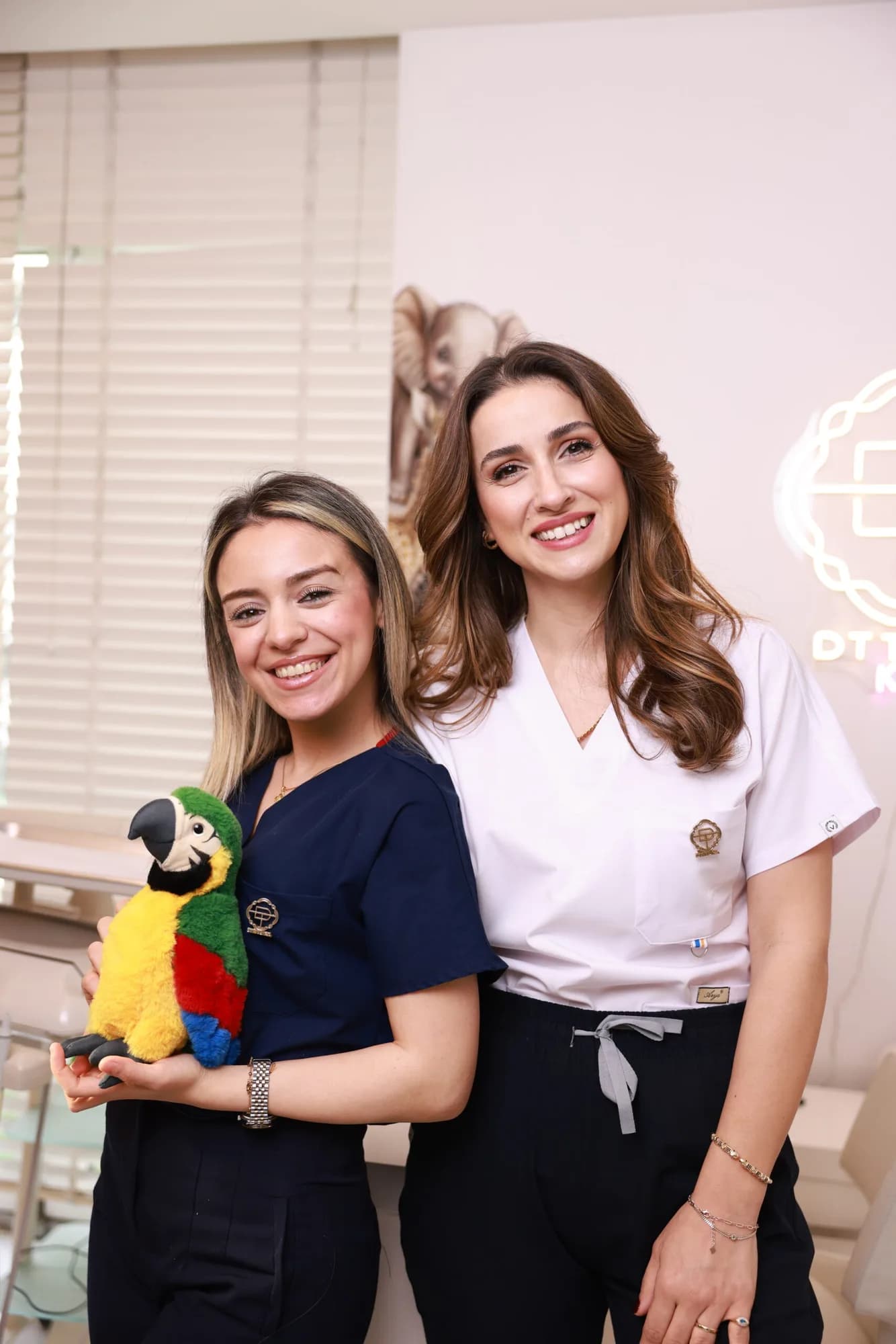
Paediatric Dentist
Graduated from Marmara University's Faculty of Dentistry and completed her specialty in paediatric dentistry. Alongside treating decay in baby teeth and preventive care, she focuses on helping children feel at ease with the dental chair rather than afraid of it.
DetailsDentist — Founder
A graduate of Marmara University's Faculty of Dentistry, he founded the clinic. He treats adult patients in the general dentistry section at the same address; on the paediatric side, it is through him that the rest of the family is followed and siblings' appointments are arranged for the same day.
DetailsChildren's appointments aren't packed back to back: each slot leaves room for getting acquainted, explaining and a break if needed.
Open until 19:00
We try to make room the same day for toothache
This is a sample day. The hours come from the clinic's opening times and the treatment names from the site's own content; it contains no real appointment records.
Affiliations
Showing your child the clinic beforehand does half the work of the first visit at home.
You don't need to know which treatment is needed. Pick the sentence closest to your situation and we'll explain what we do for it.
WhatsApp, phone or the form · same-day reply
Listening, an oral examination · an X-ray if needed
A written plan · number of visits and timing
Treatment · then a follow-up appointment
This outlines how the clinic works; it is not a real patient record or conversation.
A mouth does something different at every age. Tap your child's age: what to expect in that period, what we do at the clinic and what you do at home — all three together.
The first baby tooth usually appears between 6 and 10 months; by the second birthday close to sixteen teeth are through. Sore gums, more drooling and restlessness are expected in this period.
A first visit when the first tooth appears, or by the first birthday at the latest. No instruments are used: we look at the mouth on your lap, assess risk and go through feeding and brushing with you.
Wipe the gums with a damp cloth before the teeth arrive; with the first tooth, start a soft brush and a rice-grain smear of fluoride paste. Falling asleep with a bottle raises decay risk, even with milk.
These are wide reference ranges, not a timetable. The difference between children can be a full year, and that alone is not a problem.
A fall-related dental injury is the most common oral emergency of childhood, and the first minutes change the outcome. Pick what happened; what to do, what not to do and what comes next are here.
Rinse the mouth with warm water and, if it is bleeding, press with clean gauze for five minutes. If you find the broken piece, keep it in milk or saline; in some cases it can be bonded back on.
Do not wrap the piece in a tissue and let it dry out; a dried fragment usually cannot be used. Do not poke at the fracture and do not rub numbing gels onto the gum.
Come in the same day. If the nerve is exposed, early treatment makes it easier to keep the tooth alive; the longer a fracture waits, the fewer the options.
These lines are widely accepted first-aid steps; they do not diagnose, do not prescribe treatment and do not replace an examination. For loss of consciousness, bleeding that will not stop or a suspected jaw fracture, go to the nearest emergency department.
Not to pass the time in the waiting room, but so your child knows the clinic before the first visit. All run in the browser and none collects data.
The games are for information and fun. None of them diagnoses, recommends treatment, or replaces an examination.
Short, practical notes on brushing, food and habits.
Answers to what we're asked most in the surgery. If yours isn't here, call or write — we answer on the phone too.
Within six months of the first tooth, and no later than the first birthday. That sounds early, but the purpose is meeting rather than treating: a child who sees the clinic while nothing hurts starts the next several years on a different footing. Decay that begins at this age also moves quickly, and its first sign — a pale white band along the gum line — is easy to miss at home.
No treatment. The child sits on your lap or in the chair, whichever they prefer; they hold the mirror, look at their own teeth with the light, and hear the instruments from a distance. I look in the mouth for a few minutes: how many teeth have erupted, whether there are patches on the enamel, how the bite meets. The rest of the appointment is yours — I show you brushing on your own hand and we measure the paste on a real tube.
Say little. "They're going to count your teeth" is enough. Sentences like "don't be scared", "it won't hurt" or "there's no needle" put things in a child's head that were never there — a word not used does not come to mind. Also, do not recount your own dental history, and do not book over a nap or a meal. Mornings, with a rested child, work best.
It does. A baby molar stays until around ten years of age; in a five-year-old it is only halfway through its life. During that time it chews, contributes to speech, and holds open the space the permanent tooth underneath will need. Lost early, the tooth behind it drifts forward and the permanent one finds no room — which comes back a few years later as orthodontic treatment.
Manual skill is usually enough for the back teeth at around seven or eight. Until then, finish the evening brushing yourself: let the child brush, then you complete it. Frame it as a turn rather than an inspection — "you first, then me". Flossing does not depend on age at all; it starts the moment two teeth touch.
The amount depends on age: a smear the size of a grain of rice up to three, a pea after that. We set the fluoride level together at the appointment, based on your child's age and decay risk; where risk is high a higher-fluoride paste may be advised. Do not rinse the mouth with plenty of water after brushing — spitting is enough; rinsing washes away the protection the paste leaves on the surface.
Tell us your child's age and any concern; we'll place the appointment at a time that isn't rushed.
0 533 400 88 62An appointment request is not a confirmed booking; the clinic calls you the same day to confirm.